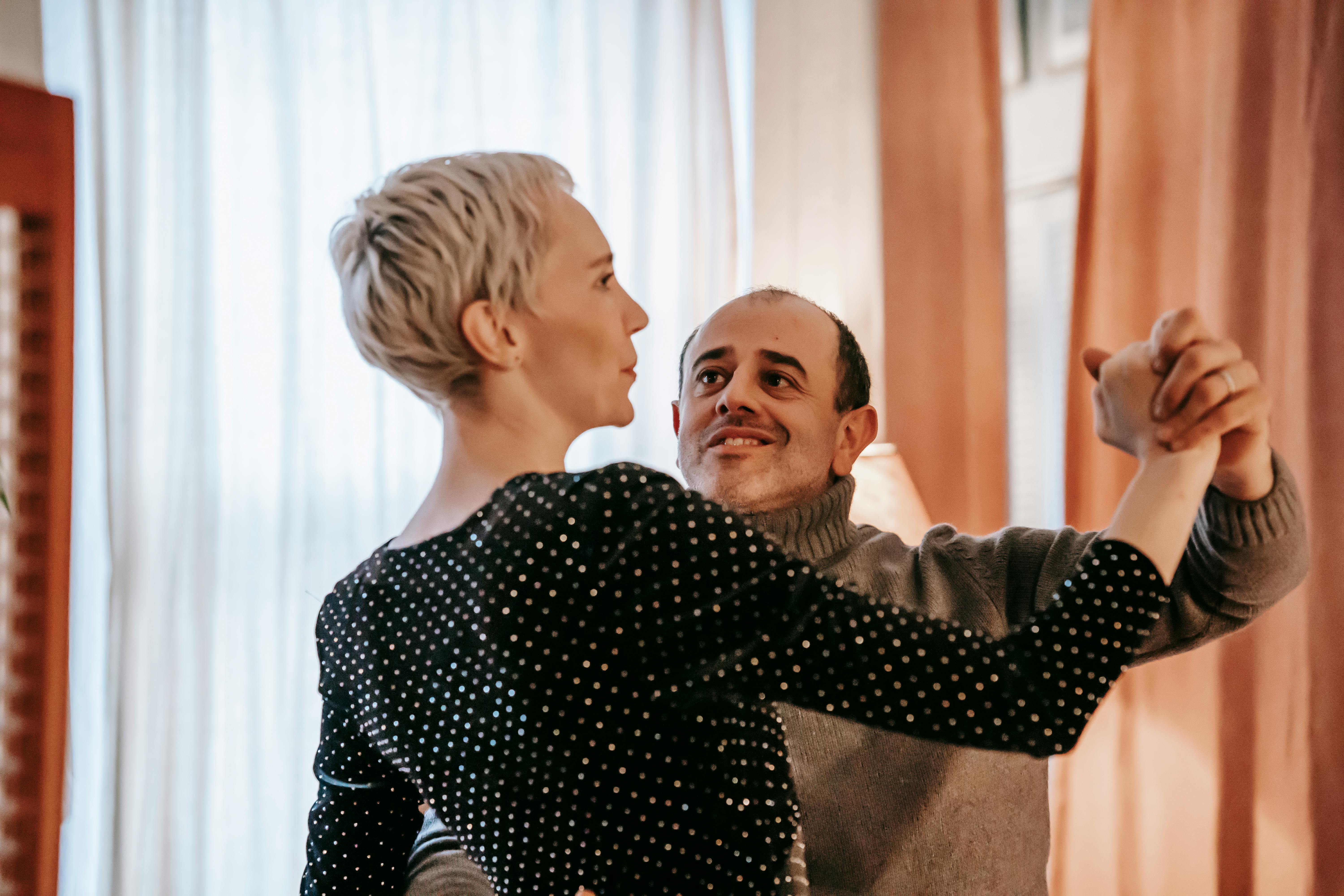
First, let go of the "too late" myth
The most common thing adult beginners say walking into their first lesson is some version of "I wish I'd started sooner." And while that impulse is understandable, it's also beside the point. Adult learners bring things to the dance floor that younger students often don't: intentionality, life experience, a genuine reason for being there, and the ability to absorb why a movement works — not just copy it blindly.
The learning curve is real, but it's not a wall. It's a series of small plateaus, each followed by a click of understanding that makes everything feel worth it.
What the first six months actually look like
MONTHS1–2
Foundations and a lot of new vocabulary
Frame, footwork, timing, basic patterns. Everything feels foreign. That's exactly right — your brain is building new wiring.
MONTHS3–4
The "I'm getting it" moment — followed by doubt
Patterns start to feel familiar. Then you add musicality or a new figure and you're back to square one. This is normal, not a setback.
MONTHS5–6
Connection and confidence start to click
You stop counting beats out loud. You start feeling the music. Social dancing stops feeling terrifying. This is where it becomes fun.
The honest realities (and the upsides)
BE READY FOR
Feeling uncoordinated at first, even if you're athletic. Ballroom uses your body in entirely unfamiliar ways — this is temporary.
WHAT SURPRISES PEOPLE
How quickly you start to feel the music differently. Most students notice a shift in how they hear rhythm within the first month.
BE READY FOR
Partner dynamics taking adjustment. Leading and following are skills of their own — separate from the footwork, both take time to develop.
WHAT SURPRISES PEOPLE
The community. Ballroom studios tend to be genuinely warm. Most students find unexpected friendships within their first few weeks.
How to set yourself up for success
Consistency beats intensity every time. Two lessons a week with practice in between will outpace one marathon session per week almost without exception. Your nervous system needs repetition over time — not volume in a single sitting.
Practice doesn't have to mean a full rehearsal. Running your basic steps while waiting for coffee, mentally reviewing a figure during your commute, or simply listening to waltz or cha-cha music with intention all count. You're training your body's relationship with rhythm as much as you're training steps.
A WORD ON GROUP VS. PRIVATE LESSONS
Group classes build social fluency and expose you to many partners — invaluable. Private lessons accelerate your technical foundation. Ideally, do both. If budget is a constraint, start with group and add privates once you have a clear sense of what you want to work on.
Managing the emotional side of learning
Nobody talks enough about how emotionally exposing it is to learn something physical as an adult. You're used to being competent in your life. The studio is a place where you're a beginner, visibly, in front of others. That takes courage — and it's worth acknowledging that.
The students who progress fastest aren't the most naturally talented. They're the ones who laugh at their mistakes, ask questions without embarrassment, and show up even when they don't feel ready. Give yourself the grace you'd give a friend learning something new.
What six months of progress actually looks like
By the end of your first six months, you won't be competition-ready (though some people are, and that's fine too). What you will have is a genuine foundation: a sense of your body in space, a feel for partner connection, a growing relationship with the music, and a handful of dances you can actually enjoy on a social floor.
More than the steps, you'll have started to understand what ballroom dance actually is — a conversation between two people, set to music. That understanding, once it arrives, tends to stick around for life.
"Every expert on the floor was once exactly where you are now — just deciding to stay."