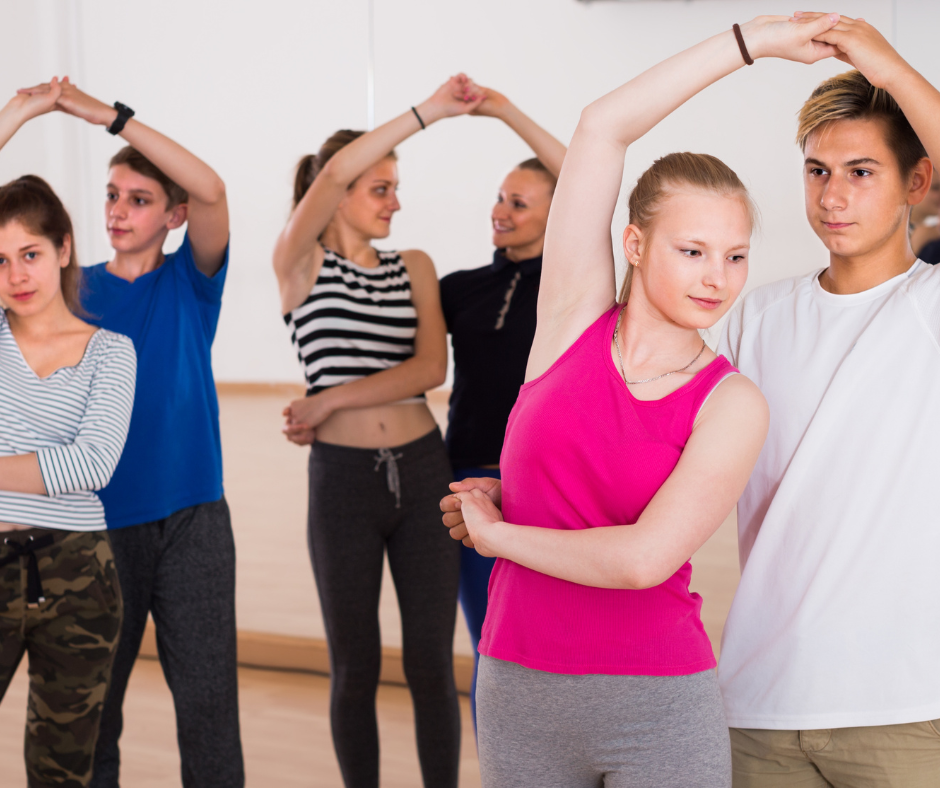
It's one of the first decisions every new dancer faces — and one that returning dancers revisit constantly. Group class or private lessons? The honest answer is that both have a place. The better question is: which one do you need right now?
What each format actually offers
Group classes and private lessons aren't just different price points for the same thing. They develop different skills, create different environments, and serve different moments in your dance journey.
Group classes (typically $15–$30 per class) are great for building social fluency by dancing with many different partners. The lower cost makes it easier to attend regularly, and the community atmosphere keeps it fun. You get exposure to different styles, tempos, and body types. The tradeoff is limited individual feedback and a pace set by the group, not by you.
Private lessons (typically $70–$150 per hour) give you targeted feedback on your specific issues, with a pace that adapts entirely to you. Technical development is faster, and they're ideal for competition preparation. The main downside is cost — it limits how often you can attend, and you get less exposure to rotating partners.
The hidden value of group classes
Group classes get underestimated by dancers who are serious about improving. Because the format feels less rigorous, it's easy to assume it's only for beginners or casual dancers. But group classes build something that privates can't easily replicate: adaptability.
When you rotate through different partners — different heights, different levels, different timing habits — you learn to listen, adjust, and communicate through movement. That's what social dancing actually is. A dancer who has only ever trained with one teacher in private lessons often struggles on a real dance floor. Group classes are where social fluency is built.
Dancing with 8–10 different partners in a single group class teaches you more about leading and following than any single private ever could. Each new partner is a new puzzle — and solving it is the skill.
The irreplaceable value of private lessons
That said, there are things that simply cannot happen in a group setting. A teacher watching 12 people at once cannot catch the specific way your left shoulder drops in a reverse turn, or notice that you're initiating your step with your toe instead of your heel. Privates are a magnifying glass. They find and fix the small things that compound into big limitations over time.
If you're preparing for a competition, recovering from a technical plateau, or learning something genuinely new and complex, private lessons are almost always worth the investment. The targeted nature of one-on-one instruction compresses months of group-class learning into a fraction of the time.
Which one fits your situation?
Just starting out and want to meet people? Go with group. Have a competition in 8 weeks? Book privates. Hit a plateau you can't figure out? You need a private. Want to dance socially and enjoy the community? Group is your home. Have the budget and want well-rounded development? Do both.
The ideal combination
Most dedicated dancers eventually land on the same formula: one private lesson per week to address technical specifics, plus one or two group classes to build social fluency and stay connected to the community. The private gives you depth; the group gives you range.
If budget is a constraint, start with group and add a private once a month as a check-in. Use that session to identify your biggest issue, then work on it in group classes and home practice for the next four weeks. That rhythm — diagnose in private, develop in group — is surprisingly effective.
Most studios offer an introductory private at a reduced rate. Take it even if you plan to primarily do group classes. It gives your teacher a baseline on you, and it gives you a feel for the studio's teaching philosophy before committing.
The bottom line
There's no universally right answer — only what's right for where you are right now. A complete beginner belongs in group classes. A dancer preparing for competition needs private attention. Someone who's been dancing a year and wants to keep growing probably needs both, in balance.
The best thing you can do is try both, pay attention to where you feel yourself growing, and be honest about what you actually need — not just what's most comfortable.