"The performance you peak with is the one you've already stopped rehearsing in your head."
Why timing your video review matters
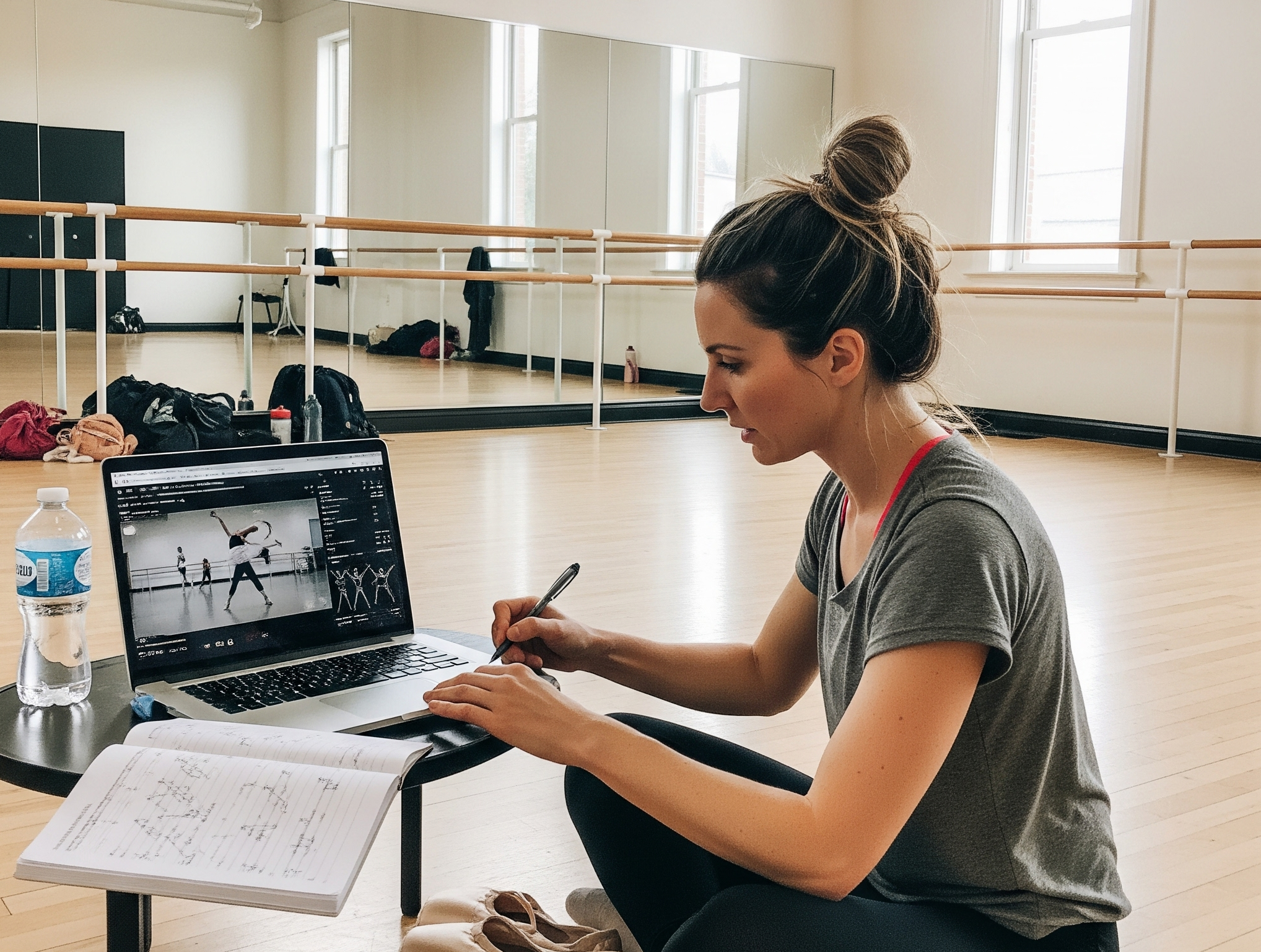
Most dancers film themselves inconsistently — a quick selfie-video here, a run-through there. But video review, used strategically across your competition prep timeline, is one of the most powerful tools you have. The key word is strategically. Watching yourself too critically in the final days before a competition can undermine confidence and trigger last-minute corrections that disrupt muscle memory. The goal is to use video as a feedback loop at the right phase, then let go.
The three phases of video review
Think of your prep window in three distinct phases, each with a different purpose for how you use footage:
PHASE 1
Diagnose & Build
8–4 weeks out
PHASE 2
Refine & Lock In
4–1 week out
PHASE 3
Trust & Activate
Final 7 days
Phase 1 — Diagnose and build (8–4 weeks out)
This is your heaviest video review period. Film full run-throughs at least twice a week and watch them analytically. Look for technical patterns — not one-off mistakes, but recurring issues. Is your alignment consistently off in turns? Does your energy drop in a specific section? Are transitions rushed?
Take notes. Timestamp problems. Bring the footage to your coach and work through it together. At this stage, you can afford to make structural changes because you have time to ingrain new habits.
PRO TIP
Watch your video twice: once at normal speed for artistry and presence, once at 0.5x speed for technical detail. They reveal different things.
Phase 2 — Refine and lock in (4–1 week out)
Shift from diagnosis mode to confirmation mode. You're no longer looking for what's broken — you're looking for what's working. Film yourself and actively seek out moments that feel good. This mental reframe matters. When you watch with a critical eye in this phase, you risk opening up corrections you don't have time to close.
Limit full run-through reviews to once or twice per week. Use shorter clips to check specific details — a particular turn sequence, your opening 8 counts, your ending. And crucially: after you watch and note one or two things to fix, close the laptop. Don't spiral.
PRO TIP
Create a short highlight reel of your best moments from earlier footage. Watch this before practice in phase 2 to prime your nervous system for success.
Phase 3 — Trust and activate (final 7 days)
This is where most dancers make the mistake of ramping up their self-analysis right when they should be winding it down. In the last week, video review should shift from critique to confidence-building.
If you film at all, watch only to affirm — look for moments where you're fully embodied, where the choreography looks effortless, where your performance energy comes through. Don't watch looking for flaws. Your body knows this material. Your job now is to trust that and get out of your own way.
In the 48 hours before competition, step away from footage entirely. The body benefits from rest and mental space — not more input.
A note on what to actually look for
When you do sit down to review footage, resist the urge to watch yourself the way a judge would. Watch yourself the way a storyteller would. Is your intention legible? Does the performance land? Are you present, or are you executing steps while mentally somewhere else?
Technical precision matters, but so does the quality of your presence. Video is one of the few tools that lets you see both at once — use it for both.