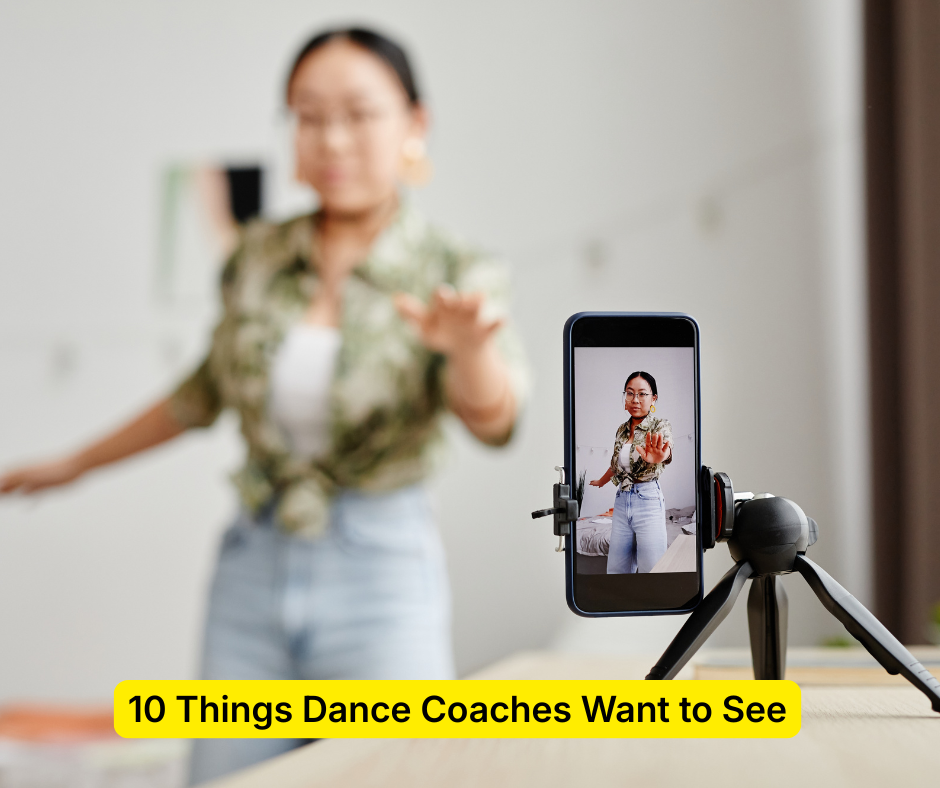
You've found the perfect coach, paid for your first video critique, and now you're staring at your phone trying to figure out what to actually send them. Should you record your best dancing to impress them? Your worst to show what needs fixing? A full routine or just problem areas? Do you need to explain everything or let the dancing speak for itself?
First video submission anxiety is completely normal. You're about to expose your dancing to expert scrutiny, spend money on professional feedback, and you want to ensure you get maximum value from the investment. The good news: coaches want to help you improve, not judge you harshly. The better prepared your video submission, the more specific and valuable their feedback becomes.
This guide reveals exactly what coaches look for in video submissions and how to prepare yours for maximum coaching value. These aren't arbitrary preferences—they're practical requirements that help coaches give you the specific, actionable feedback that produces real improvement.
1. Clear, Full-Body Framing Throughout
What Coaches Need
Coaches must see your entire body—head to feet—throughout your entire routine. Partial framing that cuts off your head during rise movements or clips your feet during footwork makes comprehensive technical analysis impossible. Half the technical issues coaches identify come from observing how different body parts coordinate together. Seeing only your upper body hides footwork problems. Seeing only your feet hides frame and posture issues.
Why It Matters
Dance is a full-body activity where everything connects. Your foot position affects your hip alignment, which influences your frame, which impacts your head position. Coaches analyzing partial footage miss these connections and provide incomplete feedback. A coach who can't see your feet can't determine whether a balance problem stems from incorrect foot placement or weight distribution. A coach who can't see your frame can't assess whether upper body issues cause lower body compensation.
How to Achieve It
Position your camera 10-15 feet away from your dancing space—farther than feels natural. Test your framing by dancing your full routine while recording. Watch the playback critically: Do you ever leave the frame? Does your head disappear during rise? Do your feet get cut off during footwork?
If you're consistently getting clipped, move the camera farther back. If you're too small in the frame, you're probably fine—coaches can zoom in during review, but they can't see what's outside the frame boundaries.
For partnership dancing, frame wide enough to capture both partners completely throughout the entire routine. The camera should capture your full range of movement across the floor, not follow you around the room.
Common Mistakes
The most frequent framing error is positioning the camera too close because you want coaches to "see clearly." This creates constant frame clipping that frustrates analysis. Another common mistake is using portrait (vertical) orientation instead of landscape (horizontal), which cuts off partnering positions and horizontal movement across the floor.
2. Good Lighting That Shows Detail
What Coaches Need
Coaches must see your body clearly enough to distinguish specific positions, angles, and movements. They need to see foot positions, body alignment, frame details, and subtle movements like head position changes or weight shifts. Lighting that's too dim makes you a silhouette. Harsh backlighting creates similar problems. Uneven lighting that leaves parts of your body in shadow hides technical details.
Why It Matters
Technical coaching relies on visual precision. A coach needs to see whether your heel leads or your toe leads, whether your frame maintains consistent height, whether your body rotation creates proper alignment. Poor lighting turns specific observable details into vague impressions, forcing coaches to guess rather than provide definite corrections.
Lighting also affects video quality emotionally. Dark, poorly lit videos suggest carelessness, while well-lit footage demonstrates professionalism and respect for the coaching process. Coaches respond more enthusiastically to submissions that show you took the submission process seriously.
How to Achieve It
Natural daylight from windows provides the most flattering, even lighting. Position yourself so windows are beside or behind the camera (not behind you, which creates backlighting). Overcast days produce beautiful, even lighting without harsh shadows—perfect for dance videos.
If recording indoors with artificial light, use multiple light sources rather than one harsh overhead light. Turn on all available room lights to create relatively even illumination. Avoid recording in dimly lit spaces—if you need to squint to see clearly in person, the camera will struggle even more.
Test your lighting before recording your submission. Record 30 seconds, watch it back, and verify you can clearly see details like your foot positions and frame angles. If the video looks muddy or you appear as a dark figure, improve the lighting before recording your actual submission.
Common Mistakes
Backlighting is the most common lighting error—recording with bright windows behind you makes you appear as a silhouette. Another frequent mistake is relying solely on harsh overhead lighting that creates unflattering shadows. Finally, many dancers record in dimly lit practice spaces where they can see fine in person but the camera struggles to capture clear video.
3. Stable Camera Position (Use a Tripod!)
What Coaches Need
Completely stable, stationary footage from a fixed camera position. Coaches need consistent framing and a steady image to analyze your movement accurately. Shaky handheld footage, cameras propped precariously that shift during recording, or people filming who pan and zoom create disorienting footage that's difficult to analyze.
Why It Matters
Dance coaching requires frame-by-frame analysis of specific movements. Coaches pause, rewind, advance slowly, and scrutinize particular moments. Camera movement makes this detailed analysis difficult or impossible. When the frame is bouncing or shifting, coaches can't accurately assess your body position because they can't separate your movement from camera movement.
Stable footage also demonstrates preparation and professionalism. Shaky video suggests you threw together a quick submission without much thought. Stable, well-framed footage shows you're serious about improvement and respectful of your coach's time.
How to Achieve It
Invest in a basic smartphone tripod ($15-30). This single purchase transforms your video quality immediately and permanently. Set up the tripod at the appropriate distance and height, frame your shot, start recording, and dance your routine. The camera never moves, ensuring stable footage throughout.
If you absolutely cannot obtain a tripod, find the most stable surface possible—a table, chair, or shelf—and ensure your phone is completely secure before recording. Use a phone case or props to angle the camera appropriately. Test thoroughly to verify it won't shift or fall during recording.
Never ask someone to film handheld unless they have professional videography experience. Even well-meaning friends create shaky, wandering footage that diminishes coaching value.
Common Mistakes
The most common mistake is propping phones against walls or objects without adequate stability testing. Halfway through your routine, the phone shifts slightly, ruining your framing. Another frequent error is asking friends to film handheld—even when they try to hold still, natural body sway creates movement that distracts from your dancing.
4. Context About Your Goals and Concerns
What Coaches Need
Clear information about what you're working on, what specific feedback you want, and what your goals are. Coaches provide better targeted feedback when they understand your priorities. Without context, they make educated guesses about what you care about most.
Why It Matters
Generic feedback addresses everything equally—frame, footwork, timing, musicality, presentation. Contextualized feedback prioritizes what matters most to you right now. If you're preparing for a competition in three weeks, you need different feedback than someone working on long-term technical development. If you're specifically struggling with natural turns, you want detailed analysis of those moments rather than equal attention to everything.
Context helps coaches calibrate feedback complexity to your level. Explaining you're a bronze-level competitor versus an open champion changes how coaches discuss technique—different terminology, different expectations, different corrections.
How to Achieve It
Include a brief submission note (3-5 sentences) with every video:
"I'm an intermediate standard dancer preparing for my first open-level competition in six weeks. I've been working on maintaining frame height through natural turns but feel like my left elbow still drops. Would appreciate feedback on frame stability and any other high-priority issues you notice for competition preparation."
This context tells your coach:
Your experience level (intermediate, first open competition)
Your timeline (six weeks—prioritize high-impact corrections)
Your specific concern (frame through natural turns)
Your primary goal (competition preparation)
What to Include
Effective context covers:
Your current level: Beginner, intermediate, advanced; social dancer vs. competitor; what level you compete at
Your specific goals: Competition prep, exam preparation, general improvement, working on specific technique
Your particular concerns: Specific movements or techniques you're struggling with
Relevant background: Recent coaching focus, previous feedback you've received, changes you've made recently
Timeline: When is your competition/exam/performance if applicable
Common Mistakes
The most common mistake is providing no context at all—just uploading video with no explanation. Coaches then spend time analyzing everything equally rather than prioritizing what matters most to you. Another frequent error is writing excessively long explanations that bury important details in paragraphs of background. Keep context concise and focused.
5. Authentic Dancing, Not Sanitized Performance
What Coaches Need
Your real dancing—how you actually perform in practice, competition, or social dancing situations. Coaches need to see your authentic technique, including mistakes and weaknesses, to provide corrections that address actual issues.
Why It Matters
Many dancers instinctively want to submit their very best footage to impress coaches. This impulse is understandable but counterproductive. If you only show your coach what you do perfectly, they can't help you improve what you struggle with. The video where you executed everything flawlessly isn't the video that needs coaching feedback.
Coaches expect to see mistakes—that's why you're hiring them. They're not judging your worth as a dancer; they're analyzing specific technical elements that need improvement. Your "best" dancing might hide the exact issues you need help fixing.
How to Achieve It
Record multiple takes if needed, but don't cherry-pick only perfect executions. Submit footage that's representative of your typical dancing. If you struggle with a particular movement, include footage showing that struggle so your coach can diagnose why it's difficult.
Competition footage makes excellent coaching material because it captures your authentic dancing under pressure—including how technique breaks down when you're nervous or tired. Practice footage works well if it honestly represents your current ability.
If you've recorded multiple takes and they're all roughly equal quality, choose the one you feel is most representative, not necessarily the "best." If one take shows you at your absolute peak and another shows typical performance with usual mistakes, the second take provides better coaching value.
When "Best Footage" Makes Sense
The exception: if you're submitting footage to showcase new technique you've successfully implemented and want confirmation you're executing correctly, then yes, submit your best execution. But clarify this in your context: "I've been working on these corrections for three weeks and this video shows my best execution—am I implementing correctly or still missing something?"
Common Mistakes
The most common mistake is recording 10-15 takes and only submitting the one perfect run where everything miraculously worked. Your coach sees polished technique that doesn't need correction and misses the issues you actually struggle with. Another error is editing out mistakes or problem sections—coaches need to see the whole picture, including what breaks down and when.
6. Adequate Video Length and Content
What Coaches Need
Enough footage to assess patterns rather than isolated incidents. One attempt at one movement doesn't reveal whether an issue is systematic or a one-time fluke. Coaches need to see repeated examples to identify consistent technical problems versus occasional mistakes.
Why It Matters
Single instances of technique don't reveal patterns. If your frame collapses once during a three-minute routine, that might be an isolated recovery from a stumble. If your frame collapses on every natural turn throughout the routine, that's a systematic technical issue requiring correction. Coaches distinguish between patterns (fix these) and anomalies (don't worry about these) by observing multiple instances.
Adequate length also ensures coaches see enough of your dancing to provide comprehensive value. A 15-second clip limits feedback to that specific moment. A 90-second routine provides enough material for thorough analysis across multiple technical elements.
How to Achieve It
For general coaching, submit 60-90 seconds of continuous dancing. This typically equals:
One complete competition routine
One full practice routine to music
A medley of patterns showing various movements
For specific technical questions about particular movements, 30-45 seconds focusing on that movement repeated several times works well. Include multiple attempts: "Here are five attempts at natural spin turns where I'm struggling with the exit."
If you have multiple videos (competition footage from different angles, practice footage, etc.), submit the most relevant one for your coaching question. Some coaches accept multiple videos for comparison—check their guidelines.
What to Avoid
Don't submit 5-minute videos unless your coach specifically accepts longer footage. Most coaches structure pricing around reviewing 60-120 seconds. Extended footage increases their review time significantly and might not be covered by your payment.
Don't submit tiny clips (15-20 seconds) unless working on one very specific movement. Brief clips limit coaches' ability to assess patterns and provide comprehensive feedback worth your investment.
Common Mistakes
Common mistakes include submitting overly long videos without checking coach preferences, or submitting very short clips that don't provide enough material for valuable feedback. Another error is submitting multiple unrelated videos in one submission when the coach expects one focused video.
7. Audible Music That Shows Your Timing
What Coaches Need
Clear audio of the music you're dancing to. Coaches assess timing, musicality, and rhythm interpretation—all impossible without hearing the music clearly. They need to verify you're on beat, evaluate your musical interpretation, and determine whether technical issues relate to timing problems.
Why It Matters
Many technical problems stem from timing issues. A dancer whose natural turn looks rushed might not have a turn technique problem—they might be late entering the turn and rushing to catch up to the music. A coach who can't hear the music clearly can't distinguish between technical issues and timing issues.
Musicality coaching—phrasing, accenting, musical interpretation—requires coaches to hear precisely what you're hearing. If the music is barely audible or drowned out by ambient noise, coaches can't provide musicality feedback.
How to Achieve It
If recording in a studio or practice space with music playing, position your camera close enough that music is clearly audible. Test your audio before recording your submission—record 30 seconds, play it back, and verify you can clearly hear the music.
If music is too quiet in your recording, use a portable Bluetooth speaker positioned near the camera to boost volume. Many speakers cost $20-30 and solve audio problems permanently.
For competition footage shot from audience areas, music is usually captured adequately despite ambient noise. If you have multiple competition videos with varying audio quality, choose the one with clearest music.
When Silent Video Works
If you're submitting footage specifically for visual technique analysis (footwork, body position, frame) and not requesting timing or musicality feedback, silent or poor-audio video might suffice. But clarify this in your submission: "Audio quality is poor but I'm specifically requesting feedback on frame positioning, not timing."
Common Mistakes
The most common audio mistake is recording in large spaces where music dissipates before reaching the camera, resulting in barely audible background music. Another frequent error is recording with the phone's microphone facing away from the music source, capturing room echo rather than clear music.
8. Starting Position and Ending Hold
What Coaches Need
Clear view of your starting position before you begin dancing and your ending position held briefly after you finish. Coaches assess your frame setup, initial posture, and whether you maintain quality through the final position.
Why It Matters
Starting position reveals crucial information about frame, posture, and connection before movement complicates analysis. If your frame is already problematic standing still, movement won't fix it—it'll make it worse. Coaches can immediately identify setup issues that undermine everything that follows.
Ending position shows whether you maintain technique through completion or break down as you finish. Many dancers maintain good technique through most of their routine but collapse frame or posture at the end. Coaches noting this pattern provide feedback about stamina, concentration, or technical consistency.
How to Achieve It
Before starting your routine, get into starting position and hold it for 2-3 seconds while recording. This gives coaches a clear view of your setup. Then begin dancing naturally.
At the end of your routine, hold your final position for 2-3 seconds before relaxing. This lets coaches see your finishing position clearly.
Don't start recording mid-movement or cut off recording before you've fully stopped. Coaches want to see the complete picture from setup through finish.
What This Reveals
Starting position shows:
Initial frame setup and whether it's correct before movement
Postural alignment and body positioning
Partnership connection quality (for couples)
Whether you're properly prepared to begin movement
Ending position shows:
Whether you maintain quality through completion
How fatigue or loss of focus affects your technique
Your ability to control movement through the ending
Common Mistakes
The most common mistake is starting recording right as you begin moving, with no clear starting position visible. Another frequent error is cutting off recording the instant you stop moving, before coaches can see your final position. Finally, some dancers feel self-conscious holding positions, so they rush through starts and endings—resist this impulse.
9. Information About Partnership and Roles (If Applicable)
What Coaches Need
If you're submitting partnership dancing, coaches need to know:
Which partner is requesting coaching (both, just leader, just follower)
How long you've been dancing together
What specific partnership issues you're experiencing (if any)
Whether you want feedback on both partners or focused on one
Why It Matters
Partnership coaching differs from individual coaching. If coaches don't know who's requesting feedback, they might provide detailed corrections for your partner while barely mentioning issues relevant to you. If you're the follower seeking frame corrections but your coach spends most of the critique discussing the leader's technique, you've wasted your investment.
Partnership dynamics also context matters. A couple who's danced together for five years should display more refined connection than a couple in their first month together. Coaches calibrate expectations and feedback based on partnership experience.
How to Achieve It
In your submission notes, clarify partnership details:
"My partner and I have been dancing together for eight months. We're both submitting this video together and would like feedback on both our technique and our connection quality. We particularly struggle with maintaining frame during spin turns."
Or: "This is me (follower) dancing with my partner. I'm requesting coaching for myself specifically, focused on my following technique and frame. My partner has his own coach so general observations about his leading are fine but detailed corrections for him aren't necessary."
For Solo Coaching in Partnership Context
If you're submitting partnership footage but only requesting coaching for yourself, explain what you want: "Please focus feedback on my technique as the leader. My partner and I are working with different coaches, so detailed follower corrections aren't needed—just note if connection issues stem from my leading."
Common Mistakes
The most common mistake is submitting partnership video without clarifying who wants coaching. Coaches then either provide balanced feedback on both partners (potentially wasting time on corrections your partner's own coach is addressing) or make incorrect assumptions about what you need. Another error is not mentioning significant partnership factors like vastly different experience levels or recent partnership formation.
10. Specific Questions You Want Answered
What Coaches Need
Direct questions about specific aspects of your dancing you want addressed. While coaches provide comprehensive feedback, they appreciate knowing what concerns you most or what particular questions you have.
Why It Matters
Specific questions guide coaches toward providing the exact feedback you need most. Without questions, coaches choose what to emphasize based on their assessment. With questions, they can ensure they address your primary concerns even if they wouldn't have prioritized those areas independently.
Questions also help coaches understand what you've already tried or thought about. Your question "Should I be using more rise in this natural turn or am I already over-rising?" tells coaches you've been actively thinking about rise and fall, which influences how they frame their feedback.
How to Achieve It
Include 1-3 specific questions with your submission:
"1. Is my frame height consistent through turns or does it drop as I suspect? 2. Am I fully transferring weight or leaving too much weight on my trailing foot? 3. Any thoughts on whether I'm over-rotating my upper body on the reverse turn at 0:45?"
These questions give coaches clear priorities while leaving room for additional observations they consider important.
Types of Valuable Questions
Strong questions:
Ask about specific technical elements you're uncertain about
Request verification of corrections you're implementing: "Am I executing this drill correctly?"
Seek clarity on conflicting advice: "One coach said X, another said Y—what's your perspective?"
Invite priority guidance: "I'm noticing several issues—which should I focus on first?"
Request comparative assessment: "How does this video compare to my last submission three weeks ago?"
What to Avoid
Avoid asking coaches to make decisions they can't make without more context: "Should I compete next month?" or "Should I find a new partner?" These require understanding your personal situation beyond what video reveals.
Avoid extremely broad questions: "What do you think?" or "How can I improve?" These don't guide coaches toward specific areas of concern.
Common Mistakes
The most common mistake is not asking any questions at all, leaving coaches to guess what you care about most. Another frequent error is asking vague questions that don't give coaches clear direction. A third mistake is asking too many questions (5-8), which either requires coaches to spend extra unpaid time or results in superficial answers to each question.
Bringing It All Together
Your Pre-Submission Checklist
Before submitting your video for coaching, verify:
☐ Full body visible throughout entire video
☐ Clear lighting that shows technical details
☐ Stable camera position (tripod-mounted)
☐ Music clearly audible
☐ 60-90 seconds of continuous dancing (or appropriate length for your coaching request)
☐ Starting position visible for 2-3 seconds
☐ Ending position held for 2-3 seconds
☐ Submission notes include:
-Your level and experience
-Your specific goals
-What you're currently working on
-1-3 specific questions
-Partnership details (if applicable)
The Professional Submission
When you submit video meeting all these criteria, coaches immediately recognize you're serious about improvement. Your professionalism encourages their best effort—they're more enthusiastic about coaching students who've clearly invested thought and preparation into submissions.
Compare these two submissions:
Submission A: Shaky phone video, cutting off head and feet periodically, barely audible music, no context provided, 22 seconds long.
Submission B: Stable tripod footage, clear full-body framing, good lighting, audible music, 75 seconds long, with note: "I'm an intermediate standard dancer preparing for my first gold exam in two months. I've been working on maintaining frame height through natural turns per previous coaching. Specific questions: (1) Is my frame stability improving? (2) What's my next priority correction? (3) Is my footwork adequate for gold level or does it need refinement?"
Submission B receives significantly more valuable feedback because the coach has everything needed to provide targeted, specific corrections. Submission A receives generic feedback limited by poor video quality and lack of context.
Common Submission Mistakes to Avoid
Mistake 1: Apologizing Excessively
Don't fill your submission notes with apologies: "Sorry this video quality isn't great, sorry I'm not very good, sorry about the background noise, sorry this is my first submission..."
Brief, factual context beats apologetic rambling: "Recording conditions weren't ideal—lighting is adequate but music is slightly quiet. Focus is on frame technique."
Coaches understand you're learning—that's why you're hiring them. Excessive apologizing suggests lack of confidence and wastes space better used for useful context.
Mistake 2: Over-Explaining Every Technical Issue
Don't write 500-word essays explaining everything you think is wrong with your dancing. Coaches are experts—they'll identify issues without extensive prompting.
Brief, focused context beats comprehensive self-analysis: "I struggle with natural turns—feel like my frame collapses but unsure exactly why" works better than three paragraphs explaining every aspect of your natural turn struggles.
Mistake 3: Blaming Your Partner
If you're submitting partnership video and experiencing connection issues, avoid extensively blaming your partner in submission notes. Even if issues genuinely stem from your partner, coaches want to see what you can improve within the partnership rather than validating blame assignment.
Frame partnership issues neutrally: "We're experiencing connection challenges through turns—feedback on how I can improve my contribution to the connection would be helpful."
Mistake 4: Submitting Only Problem Areas
If you're struggling with one specific movement, you might be tempted to submit only that movement repeated multiple times. While this can work for very specific technical questions, coaches benefit from seeing how that movement fits within your overall dancing.
Submit full routines that include problem areas rather than isolated clips of just those areas (unless your coach specifically requests isolated footage).
Mistake 5: Expecting Instant Transformation
Don't expect one video critique to solve everything. Dance improvement happens incrementally through repeated coaching cycles: submit video, receive feedback, implement corrections, practice, submit new video showing progress.
Your first submission establishes baseline and identifies priority corrections. Subsequent submissions build on previous feedback, creating progressive improvement over time.
Getting Maximum Value From Your Submission
After Receiving Feedback
Once you receive your coach's critique:
Watch it immediately: Fresh feedback is most valuable when you watch it shortly after receiving it, while your video performance is still in your recent memory.
Watch it multiple times: Don't watch once and move on. Review the critique before each practice session, reference specific timestamps while practicing, and return to it when implementing corrections.
Take notes: Write down the 2-3 priority corrections your coach emphasized. These notes guide focused practice between now and your next submission.
Ask follow-up questions: If anything is unclear or you're unsure how to implement a correction, ask. Most coaches welcome clarifying questions—they want you to implement correctly.
Implement systematically: Focus on priority corrections rather than trying to fix everything simultaneously. Choose 1-2 main areas to work on until your next submission.
Record your practice: Video yourself regularly implementing corrections. This self-monitoring helps you assess whether you're making the changes correctly.
Submit follow-up video: After 2-4 weeks of implementing feedback, submit new video showing your progress. This creates the coaching cycle that produces consistent improvement.
Your First Submission Sets the Tone
Your first video submission to any coach establishes the working relationship. Professional, well-prepared submissions earn coaches' enthusiasm and best effort. Sloppy submissions suggest you're not serious about improvement, which (fairly or not) affects coaching energy.
Invest effort in your first submission. Review this checklist, set up properly, provide thorough context, and show your coach you're committed to making the most of their expertise. This initial investment pays dividends throughout your coaching relationship.
Moving Forward
You now know exactly what coaches need to provide their best feedback. The technical requirements (framing, lighting, stability) ensure they can see your dancing clearly. The contextual information (goals, questions, concerns) helps them target feedback to your specific needs. The content choices (authentic dancing, adequate length, starting/ending positions) give them complete information for comprehensive analysis.
Don't overthink it—perfection isn't required. Solid framing, decent lighting, clear music, and brief context notes will serve you well. These requirements aren't arbitrary obstacles; they're practical necessities that help coaches help you improve.
Record your first submission, verify it meets these criteria, add thoughtful context notes, and submit it. Then prepare to implement the feedback that accelerates your dancing beyond what you'll achieve practicing alone. That's the value of video coaching: expert insights targeted specifically to your dancing, available for repeated review, guiding your improvement journey.
Your dancing deserves expert guidance. Your coach's expertise deserves well-prepared submissions. Meet these basic standards, and you'll get the valuable feedback that transforms your dancing and makes every coaching dollar worth the investment.