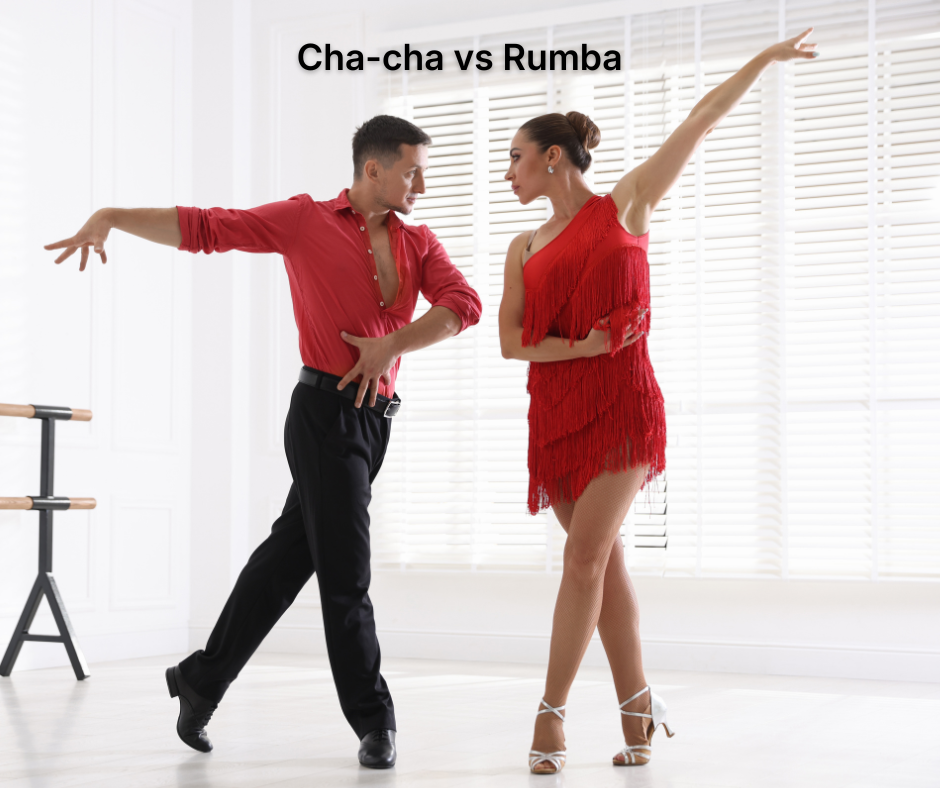
Cha-cha and rumba share a lot of DNA — both are Latin dances built on Cuban motion, hip action, and partner connection. But walk into any ballroom competition and watch closely: the dancers who score well in one don't always shine in the other. That's because judges aren't just watching your footwork. They're watching whether you understand the dance.
Here's what they're actually looking for.
The Biggest Difference: Character
Before we get into technique, this is the thing judges feel before they can even articulate it.
Cha-cha is cheeky. It's playful, flirtatious, and sharp. There's an element of "catch me if you can" in good cha-cha. The energy is extroverted and a little cocky.
Rumba is intimate. It's often called the dance of love — slower, more deliberate, more weighted. The energy turns inward, toward your partner. Rumba should feel like a conversation; cha-cha feels like a game.
Judges notice immediately when a dancer brings cha-cha energy into a rumba — or plays it safe and low-energy in a cha-cha. Character isn't decoration. It's the foundation everything else sits on.
Timing: Where Most Dancers Go Wrong
Timing is one of the most common deductions in both dances, and the two have different rhythmic traps to fall into.
In cha-cha, the defining moment is the "cha-cha-cha" — three steps on counts 4-and-1. That "and" count is where dancers lose sharpness. Judges want to see it crisp and compact, not smeared across the beat. The steps should be small and controlled, not rushed.
In rumba, the big mistake is stepping on count 1. The correct timing delays the weight transfer — you step on count 2. This sounds simple but it's one of the most misunderstood things in all of Latin dance. Rushing out of that pause kills the sensuality judges are looking for. The "slow" counts in rumba are not empty space. They're where the dance lives.
Cuban Motion: Same Technique, Different Expression
Both dances use Cuban motion — the settling of the hip as weight transfers through a straight leg. The technique is the same. The quality is not.
In cha-cha, the hip action is quicker and more accented. It punctuates the music rather than flowing through it.
In rumba, the motion is slower and more continuous. Judges look for a rolling, settling quality in the hips — not a snap or flick. The body should look like it's moving through honey, not air.
A dancer who has crisp, punchy hip action in cha-cha needs to consciously soften and slow that down for rumba, or it reads as wrong even if the technique is technically correct.
Footwork and Walks
Cha-cha walks are taken with a ball-flat action — contact the floor with the ball of the foot, then lower the heel. The steps should be compact and grounded.
Rumba walks are more elongated. Judges look for a reaching quality in the leg with a strong toe point before the heel lowers. Each step should feel like it has intention behind it — not just getting from A to B.
In both dances, flat-footed or heavy walking is a common critique. The floor should feel like something you're using, not collapsing into.
What Judges Are Writing Down
To put it simply:
Cha-cha: Are they sharp? Do they own the "&" count? Is there playfulness and energy?
Rumba: Are they patient? Do they let the hip settle? Is there genuine connection and sensuality?
The dancers who score well in both aren't just technically correct in each — they've genuinely switched gears. They're telling a different story with the same body.
If you want to know which of these is showing up in your own dancing, a video critique is one of the fastest ways to find out. What feels right in the moment often looks very different on camera.
Want feedback on your cha-cha or rumba? Submit a video at CritiqueMyDance.com and get detailed notes from an experienced coach.