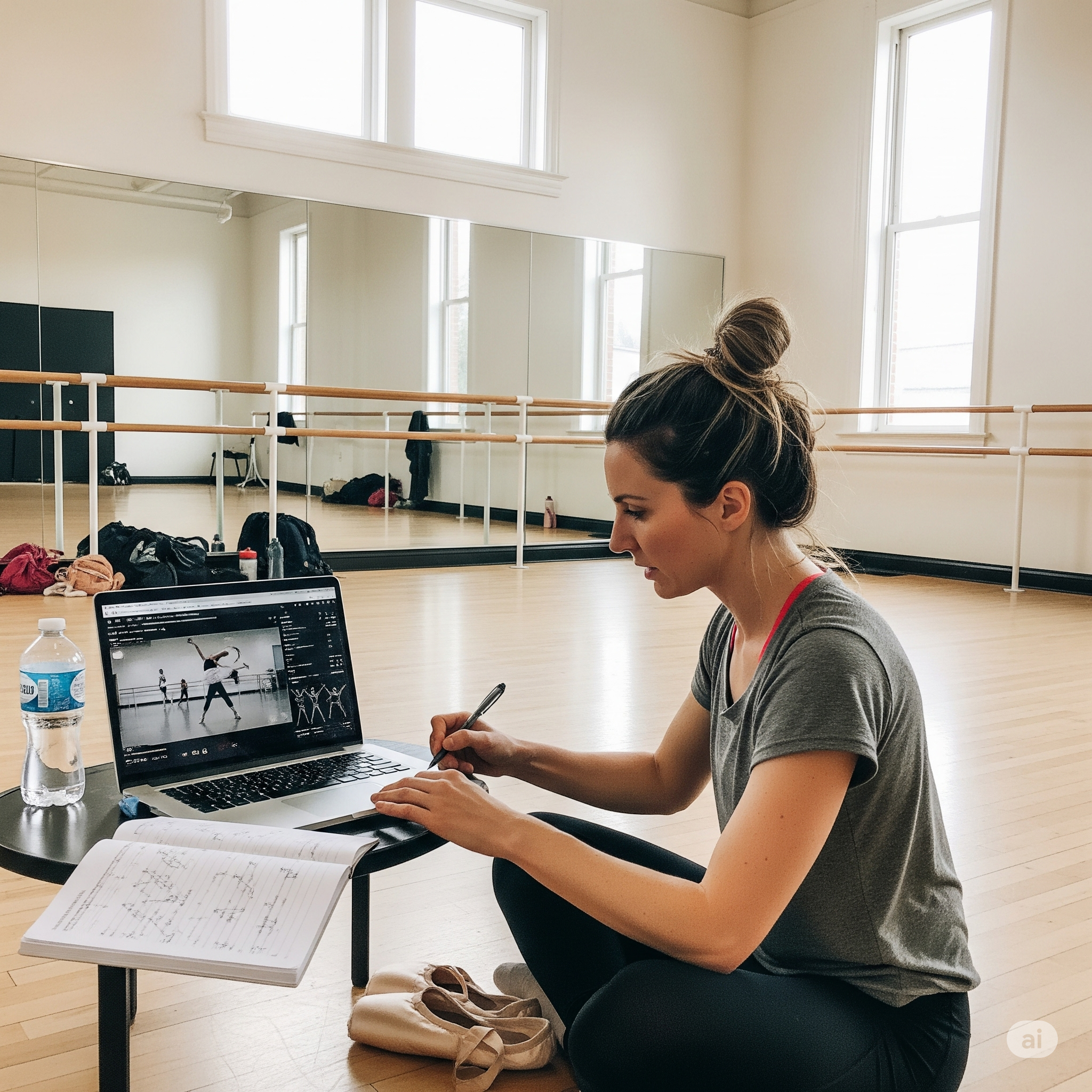
The dance instruction landscape has fundamentally changed. What once required studio space, scheduled appointments, and geographic proximity can now happen asynchronously through video feedback, reaching students across the country or around the world. If you're an experienced dance instructor or competitor, starting an online coaching business lets you monetize your expertise on your own schedule while helping dancers who might never have access to your level of instruction.
This guide walks through everything you need to launch a successful online dance coaching business, from positioning yourself in the market to delivering your first critique.
Why Online Dance Coaching Works
Video-based coaching solves real problems for both instructors and students. For coaches, it creates location independence and flexible scheduling—you can review a student's waltz routine during your morning coffee or between your own practice sessions. There's no studio overhead, no travel time, and you can work with dozens of students without the physical limitations of in-person teaching.
For students, the benefits are equally compelling. They get access to specialized expertise that might not exist in their local area, whether that's a former Blackpool finalist for standard technique or a national Latin champion. They can submit videos from their practice sessions and competitions, getting feedback on their actual dancing rather than what they can recreate in a lesson. The asynchronous format means they can review your feedback multiple times, pausing and replaying as they work to implement your suggestions.
Defining Your Coaching Niche
The most successful online coaches establish clear positioning. Rather than being a generalist who teaches "all styles to all levels," identify what makes your coaching uniquely valuable. This might be your competitive background (former national champion in smooth), your specialization (musicality and interpretation), your ideal student level (rising competitors preparing for their first nationals), or your teaching style (technical precision versus artistic development).
Your niche emerges from the intersection of your expertise and what students actually need. If you spent years mastering Cuban motion in rhythm dancing, that's your differentiator. If you've coached dozens of bronze-level competitors to silver, you understand that progression intimately. The more specific your positioning, the easier it becomes to market yourself and the more valuable your coaching appears to students seeking exactly what you offer.
Setting Up Your Coaching Business
Starting lean is the smartest approach. You don't need a registered LLC or complex business structure initially—most coaches begin as sole proprietors and formalize later as revenue grows. You do need a separate business bank account to track income and expenses, particularly important when tax season arrives. If you're using a marketplace platform like CritiqueMyDance, much of the infrastructure is handled for you, but you'll still want clarity between personal and business finances.
Professional liability insurance deserves consideration, especially as your business grows. While video coaching carries less risk than hands-on instruction, you're still providing professional advice that students rely on. Policies designed for fitness and dance professionals typically cost $200-400 annually and provide important protection.
Creating Your Service Offerings
Successful online coaches typically offer tiered services at different price points. Your basic offering might be a 10-15 minute video critique with timestamped feedback on technique, timing, and presentation. A mid-tier service could include a detailed written analysis, annotated video with drawings highlighting specific technical issues, and a follow-up review of corrections. Premium packages might involve ongoing coaching relationships with monthly video reviews, unlimited messaging for questions, and priority response times.
Pricing should reflect your expertise and credentials. Coaches with competitive backgrounds at championship levels command higher rates—typically $75-150 for a detailed video critique. Newer coaches or those working with social dancers might start at $30-50 per video. Consider your time investment: a thorough critique typically requires watching the video multiple times and 20-30 minutes creating feedback. Price accordingly while remaining competitive within your niche.
Many coaches create specialty packages for specific situations. Competition prep packages might include pre-competition video analysis, post-competition review, and a training plan for specific technical issues. Showcase or performance coaching packages focus on artistry, musicality, and presentation rather than pure technique. These specialized offerings often command premium pricing because they address urgent, high-stakes needs.
Choosing Your Platform and Tools
You have two primary approaches: building your own infrastructure or using an existing marketplace platform. Building independently gives you complete control and avoids marketplace fees, but requires handling payment processing, student management, video hosting, and marketing entirely on your own. You'll need a website, payment processor (Stripe or PayPal), video submission system, and significant time spent on marketing and student acquisition.
Marketplace platforms like CritiqueMyDance handle the technical infrastructure while connecting you with students actively seeking coaching. The tradeoff is platform fees (typically 15-25% of your coaching fee), but you gain immediate access to students, payment processing, video hosting, and built-in tools for delivering feedback. For most coaches starting out, marketplaces offer the fastest path to your first paying students.
Regardless of platform choice, invest in quality video analysis tools. Many coaches use screen recording software like Loom or OBS to provide verbal feedback while watching student videos. Video annotation tools that let you draw directly on frames help highlight specific technical issues. CoachNow and OnForm are popular among sports coaches for their annotation and feedback features, though they require separate subscriptions.
Creating an Effective Marketing Presence
Your online presence begins with a compelling coach profile. Students choosing between coaches evaluate your credentials, teaching philosophy, and communication style. Your profile should immediately establish credibility—competitive achievements, years of teaching experience, notable students you've coached. Include a professional photo and, crucially, a video introduction where students can see how you communicate and get a sense of your teaching personality.
Showcase your coaching methodology through sample critiques (with student permission) that demonstrate your attention to detail and teaching approach. Students want to know what they're getting: Do you provide timestamped feedback? Do you focus on one or two major issues or provide comprehensive notes? Do you explain the "why" behind technique corrections?
Beyond your profile, consistent content creation builds your reputation. Short-form video content performs exceptionally well for dance coaches—30-60 second technique tips, common mistake corrections, or judging insights posted to Instagram Reels and TikTok. These videos demonstrate your expertise, provide value to potential students, and often go viral within dance communities. Include a clear call-to-action directing viewers to your coaching services.
Consider writing for dance publications or blogs, appearing on dance podcasts, or teaching at workshops and competitions. These activities position you as an authority while introducing you to potential online coaching clients. Many successful online coaches find that their digital business grows from their existing reputation in the competitive dance world.
Delivering Exceptional Video Critiques
The quality of your feedback determines whether students return and refer others. Effective video critiques balance technical precision with encouraging communication. Start by acknowledging what the student is doing well—this builds rapport and makes constructive criticism more receptive. Structure your feedback logically, typically moving through the dance chronologically or organizing by priority (most impactful corrections first).
Be specific rather than general. Instead of "work on your frame," explain "at 0:45 your left elbow drops as you enter the corner, collapsing your frame and making it difficult for your partner to follow your lead into the turn." Specific, timestamped feedback is actionable. When possible, explain why a correction matters: "Maintaining frame height here helps transfer power through the connection for a cleaner spin."
Video annotation tools significantly enhance feedback quality. Draw lines showing correct body alignment, circle areas that need attention, or illustrate proper foot positions. Visual markers combined with verbal explanation help students understand complex technique corrections that are difficult to convey through words alone.
Include clear next steps. Students should leave your critique knowing exactly what to practice. Prioritize corrections—trying to fix everything at once overwhelms dancers. Instead, identify the 2-3 most impactful improvements and provide specific drills or exercises for developing those skills.
Building Long-Term Client Relationships
Your most valuable students are those who return regularly. Building retention starts with exceptional service—responding promptly to submissions, providing thorough feedback, and showing genuine investment in student progress. Follow up on previous critiques by referencing earlier feedback when you see improvement: "Your frame height has improved dramatically since your last video—excellent work implementing that correction."
Consider offering package deals that encourage ongoing coaching relationships. A "monthly coaching" package might include three video critiques and unlimited messaging for questions, priced at a discount compared to individual session rates. This provides predictable revenue while deepening your coaching relationships.
Stay connected between formal coaching sessions. A brief message congratulating a student on a competition placement, or checking in on their progress implementing specific corrections, takes minimal time but builds relationship strength. Students who feel personally connected to their coach are far more likely to continue the coaching relationship long-term.
Scaling Your Coaching Business
As demand grows, you'll face time constraints. Strategic scaling preserves quality while increasing income. Consider raising prices gradually as your schedule fills—this naturally filters for more serious students while increasing per-session revenue. Many coaches implement waiting lists once they reach capacity, creating scarcity that actually increases perceived value.
Group critiques offer another scaling option. Video reviews addressing common issues among multiple students (with permission) provide value at lower per-student cost. Some coaches run monthly virtual workshops where they review submitted videos live, providing real-time feedback while building community among their students.
Hiring and training assistant coaches becomes viable once you've established consistent demand. Junior coaches can handle beginner-level critiques or first-pass reviews that you then supplement, allowing you to serve more students while maintaining quality oversight.
Common Pitfalls to Avoid
New online coaches often underprice their services, mistakenly believing low prices drive demand. In reality, expertise-based services like coaching see stronger demand at higher price points because students associate price with quality. Price yourself according to your credentials and the value you provide, not the absolute lowest rate you'd accept.
Inconsistent availability frustrates students and damages your reputation. If you promise 48-hour turnaround on video critiques, honor that commitment. Building a successful coaching business requires treating it professionally even when it's a side venture. Set clear policies around response times, refunds, and rescheduling, then follow them consistently.
Avoid the trap of competing solely on credentials or competitive achievements. While these matter, your success as an online coach depends more on your ability to communicate effectively through video feedback. A world championship title doesn't automatically translate to effective online teaching—clear communication, actionable feedback, and genuine student care matter more for retention and referrals.
Getting Your First Students
Your initial students typically come from your existing network. Announce your coaching services to your current and former students, competitors you know, and dance community connections. Offer a discounted introductory rate for your first 5-10 clients in exchange for detailed testimonials and honest feedback on your coaching process.
List your services on dance coaching marketplaces where students actively search for instructors. These platforms provide immediate access to students seeking coaching, though they charge fees for this access. Consider this a student acquisition cost—similar to advertising expenses—that's justified by the revenue from students you wouldn't otherwise reach.
Collaborate with complementary service providers in the dance world. Dance studio owners might refer competition students who need specialized coaching. DJ services, costume designers, and competition organizers all have access to serious dancers who might benefit from your expertise. Building these referral relationships creates consistent student flow.
Making It Sustainable
Long-term success in online coaching comes from balancing revenue with sustainability. Set boundaries around your availability to prevent burnout—establishing coaching hours prevents the "always on" trap of digital business. Batch similar tasks when possible, reviewing multiple videos in a dedicated session rather than constantly context-switching between coaching and other activities.
Track your metrics to understand what's working. Monitor your conversion rate from profile views to booking requests, your student retention rate, and your average revenue per student. This data reveals where to focus improvement efforts—whether that's refining your marketing, improving your service delivery, or adjusting your pricing.
Most importantly, stay connected to why you're coaching. The financial opportunity matters, but the most successful online coaches genuinely love helping dancers improve. That authentic passion for teaching comes through in every video critique and keeps students coming back while making the work itself rewarding.
Your Next Steps
Starting an online dance coaching business doesn't require months of preparation—you can begin with your expertise, a clear service offering, and a platform for connecting with students. Create your coach profile on a marketplace platform like CritiqueMyDance, or set up your independent coaching infrastructure if you prefer complete control. Define your niche, establish your pricing, and start with your first handful of students.
The dance world needs more accessible, high-quality coaching. Your expertise—whether that's technical precision in standard, styling in rhythm, or competitive strategy—can help dancers improve in ways that geography once prevented. The question isn't whether online coaching works; thousands of coaches have already proven it does. The question is whether you're ready to share your expertise with students who need exactly what you offer.