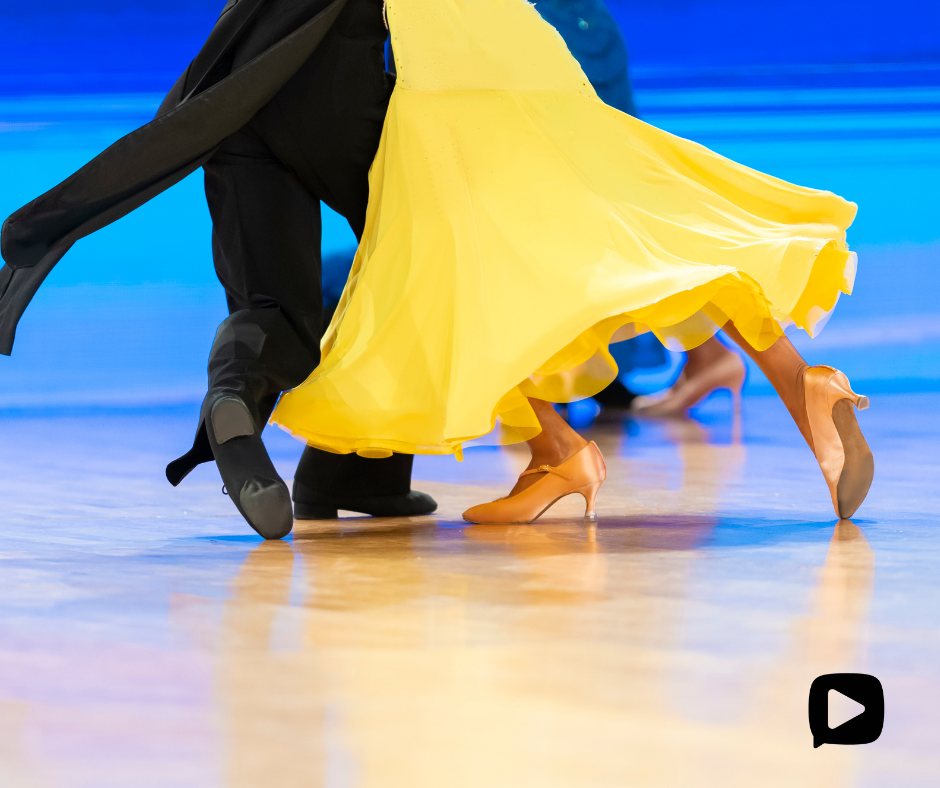
Watch any professional dancer's practice session and you'll notice something that surprises most recreational students: they record everything. World champions, touring performers, professional competitors preparing for major titles—they record practice routines, run-throughs, choreography sessions, and even informal drilling. Then they watch the footage with the same analytical intensity they bring to actual dancing.
This isn't vanity. It's methodology.
Professional dancers discovered long ago what sports science has since confirmed: video analysis reveals performance gaps that internal perception completely misses. What feels correct while performing often looks entirely different on screen. What seems like a minor technical issue turns out to be a fundamental problem affecting multiple aspects of their dancing. What they believe they're expressing often isn't communicating at all to an outside observer.
Understanding how professionals use video analysis—not just that they use it, but specifically how and why—provides a roadmap that serious dancers at any level can follow.
The Perception Gap Problem
The foundation of why video analysis matters begins with understanding why dancers can't rely on internal sensation alone.
When you dance, your brain processes enormous amounts of simultaneous information: music timing, spatial awareness, partner connection, choreography sequence, balance management, and dozens of technical elements competing for attention. This cognitive load makes accurate self-assessment nearly impossible during actual performance. You're too busy dancing to observe your dancing objectively.
Beyond cognitive load, proprioception—your body's internal sense of position and movement—is notoriously unreliable for detecting errors. Incorrect movement patterns feel normal because they've become habitual. The frame that collapses on every corner doesn't trigger any internal alarm because it's what your body has always done. The hip that doesn't settle fully feels exactly like settling because your proprioceptive baseline was calibrated to that movement.
Professional dancers call this the perception gap: the difference between how dancing feels from inside and how it looks from outside. Video analysis bridges that gap directly and honestly. The camera doesn't care what anything felt like—it shows exactly what happened.
Top competitors describe first watching themselves on video as genuinely shocking. Movements they felt were powerful looked tentative. Positions they thought were elegant revealed obvious technical problems. Lines they believed were extended were clearly short. This initial shock—common even among experienced professionals—motivates the disciplined video practice that characterizes elite training.
Recording Methodology: How Professionals Set Up
Professional dancers don't record casually. They develop systematic recording methodologies that capture useful analytical information consistently.
Multiple fixed angles provide the comprehensive view that single-angle recording misses. Professionals typically record from front, side, and occasionally back positions simultaneously when resources allow. The front angle reveals frame, symmetry, and expression. The side angle shows rise and fall, body rotation, and weight transfer. The back angle occasionally reveals hip action and footwork patterns invisible from other positions.
For most practice sessions, professionals choose the angle most relevant to what they're working on that day. Technique focused on frame uses front angle. Rise and fall work uses side angle. They're intentional about camera placement rather than defaulting to whatever position is convenient.
Consistent camera position across recording sessions allows direct before-and-after comparison. Professionals note specific camera placement—exact distance from the dance space, height, angle—so comparison footage is recorded identically. Comparing videos shot from different distances or angles introduces variables that make progress assessment inaccurate.
Recording full run-throughs alongside drilling captures both the isolated technical work and how it integrates into actual dancing. A technical correction might work perfectly in isolated practice but disappear under the cognitive load of dancing a full routine. Professionals record both contexts to verify that improvements transfer from drill to performance.
Immediate review within the same session is standard professional practice. Rather than reviewing footage days later, professionals watch between run-throughs while the physical experience is fresh. This immediate feedback loop—dance, watch, identify, adjust, dance again—accelerates the correction process significantly.
Slow Motion Analysis
Perhaps the most powerful tool in professional video analysis is slow-motion playback, and top dancers use it systematically rather than occasionally.
At normal playback speed, many technical details happen too quickly for accurate assessment. Footwork positions through turns, the precise moment of weight transfer, the exact timing of body rotation—these occur in fractions of seconds that normal-speed viewing blurs together. Slow motion isolates these moments clearly.
Professionals use slow motion for several specific purposes. Footwork verification checks whether heel leads are genuine or approximate, whether toe positions through turns are correct, and whether weight transfers complete fully before the next step begins. These details are nearly invisible at normal speed but obvious at 25-50% playback.
Body rotation timing analysis examines whether body swing happens at the correct moment relative to foot movement, whether rotation is continuous or interrupted, and whether both partners rotate together or one partner initiates and the other follows late.
Frame analysis in slow motion reveals whether frame maintains consistent position throughout entire movements or whether it holds correctly at the start and end but wobbles through the middle—a common problem that looks acceptable at normal speed.
Expression and performance quality analysis uses slow motion differently: professionals examine facial expression, eye focus, and upper body carriage through movements where concentration on technical elements typically degrades performance quality. Moments where technique anxiety overrides artistry become clearly visible.
Modern smartphones make high-quality slow motion accessible to everyone—iPhone's 240fps capability and equivalent Android options provide professional-quality slow motion without specialized equipment. What distinguishes professionals isn't access to better technology but disciplined, methodical use of the technology everyone has.
Comparison Analysis: Before and After
One of the most powerful professional video analysis techniques is systematic before-and-after comparison using the same choreography recorded under identical conditions at different points in time.
Before beginning intensive work on a specific technical element, professionals record a reference video clearly showing their current execution. After weeks of focused correction work, they record the same sequence under identical conditions and compare the two directly.
This comparison serves multiple purposes simultaneously. It provides objective evidence of whether improvement has actually occurred—crucial because the perception gap makes internal assessment unreliable. It shows exactly where improvement has transferred to actual performance versus remaining only in isolated drilling. It identifies which aspects of the correction are working and which need continued attention. And it provides motivation: visible, documented improvement is powerfully encouraging during the difficult middle phase of technical work where progress feels slower than it actually is.
Professionals often maintain video libraries of their own dancing organized chronologically for exactly this purpose. Reviewing footage from six months or a year ago against current performance reveals the accumulation of improvement that week-to-week assessment misses. Progress often happens too gradually for daily perception but becomes dramatic across longer timeframes.
Coaches use comparison videos similarly when working with students remotely. Submitting current footage alongside a video from previous months allows coaches to provide feedback that acknowledges improvement, identifies what's working, and targets remaining technical gaps more precisely than fresh-footage analysis alone.
Studying Reference Footage
Professional improvement through video analysis extends beyond studying their own dancing. Top competitors systematically study reference footage—recordings of dancers they consider technically excellent—as a core part of their training methodology.
Identifying technical models requires knowing whose dancing represents the qualities you're developing. A standard competitor working on rise and fall studies slow-motion footage of dancers renowned for exceptional rise and fall quality, analyzing exactly how they achieve it. A Latin competitor developing hip action studies dancers whose Cuban motion represents the authentic quality they're pursuing.
This reference study isn't imitation—it's education. Professionals look for the technical principles behind what they admire: how the foot positions create the hip movement, how the frame maintenance enables the elegant lines, how the musical interpretation creates the sense of complete integration between dancer and music.
Competition footage study extends reference learning to understanding what earns high placements in actual judging. Professionals watch finals footage from major competitions not for entertainment but analytical education: which couples consistently appear at the top, what qualities distinguish their dancing from those placing lower, what common characteristics unite the top three despite different partnership styles.
Video analysis of their own competition footage adds the dimension of actual performance under pressure. Practice footage shows technical capability in controlled conditions. Competition footage reveals how technique holds—or doesn't—when nerves, floor traffic, audience awareness, and competitive pressure are present.
Many professionals are candid about the gap between their practice and competition videos, particularly early in their careers. Technique that's solid in the studio reveals fragility in competition conditions. Understanding this gap is essential for prioritizing what to reinforce until it becomes automatic rather than effortful.
Working With Coaches Through Video
Elite dancers don't analyze video in isolation. They work with coaches who bring perspective, expertise, and objectivity that self-analysis can't replicate regardless of how disciplined the self-study.
Regular video coaching sessions function differently at professional level than student coaching interactions. Rather than coaches identifying fundamental mistakes, professional coaching video exchanges focus on nuanced refinement: the subtle timing difference between adequate and exceptional, the specific quality of movement that separates good from great, the interpretation choices that reflect genuine understanding versus technically correct execution.
Professionals submit video to coaches not when something obviously needs fixing but continuously, as ongoing refinement practice. This regular submission maintains an outside perspective that prevents technical errors from solidifying unnoticed over months of practice.
Multiple coach perspectives are standard at elite level. Different coaches bring different technical focuses and observational strengths. A coach known for footwork expertise catches details an expression-focused coach misses. A musicality specialist identifies interpretive opportunities a technique purist doesn't emphasize. Building a team of coaches with complementary expertise provides more comprehensive analysis than any single perspective offers.
Video as communication tool between coach and student allows preparation that makes coaching sessions more efficient. Before in-person sessions, professionals submit recent practice footage so coaches arrive having already identified issues to address. This preparation allows face-to-face time to focus on physical correction work that video coaching can't fully accomplish, rather than spending session time on identification that video review handles more efficiently.
Self-Analysis Protocols
Beyond working with coaches, professional dancers develop personal self-analysis protocols—systematic approaches to reviewing their own footage that go beyond casual watching.
Technical checklist review watches footage specifically against a defined list of technical criteria rather than general impression. A professional might review the same footage three times: once for posture and frame throughout, once specifically for footwork and weight transfer, once for musical interpretation and expression. This systematic approach catches details that single casual viewing misses.
Timestamp documentation creates notes connecting specific observations to exact moments in the footage. "At 0:47 frame drops through natural turn exit" is more useful than "frame sometimes drops through turns." These documented observations guide focused practice on specific moments rather than vague work on general areas.
Pattern identification distinguishes systematic problems from isolated incidents. If frame drops in the same five moments across three different run-throughs, that pattern indicates a systematic technical issue requiring focused correction. If frame drops once during an unusual recovery, that's an anomaly worth less practice attention. Professionals track patterns across multiple recordings rather than reacting to individual moments.
Honest assessment without self-criticism characterizes mature professional video analysis. Novices often find video review emotionally difficult—seeing technical problems while feeling the gap between actual and desired quality creates discouragement. Professionals develop the ability to watch footage with clinical detachment, treating what they see as useful data rather than judgment. This emotional neutrality makes analysis more accurate and more sustainable.
The Physical-Visual Feedback Loop
Professional dancers integrate video analysis directly into physical practice through specific training methodologies that create feedback loops between what they see on video and what they feel while dancing.
Mirror and camera combined practice uses mirrors for immediate visual feedback during movement and camera recording for review between attempts. Mirrors show current position in real time; recordings show the previous attempt objectively. Together they create more complete feedback than either provides alone.
Drilling specific moments isolated from context focuses correction work precisely. Rather than running full routines hoping a problem moment improves, professionals isolate exactly those measures or figures where video revealed problems and practice them repeatedly with complete attention on the specific correction. This targeted drilling is far more efficient than hoping issues self-correct through general practice.
Verifying implementation through immediate recording tests whether a correction actually happened physically or only felt like it happened. Dancers implement a coached correction, immediately record and review, and verify the video confirms the correction is visible. This verification step closes the loop between feeling and reality, preventing the common problem of practicing incorrect implementation of correct-sounding instructions.
Progressive speed practice recorded at each stage monitors whether technique holds as speed increases. A movement practiced correctly in slow motion must be verified at half speed, then full speed, with recording confirming technique quality holds at each progression. Technical corrections that only survive at slow practice speed haven't been fully integrated and will disappear under performance conditions.
Video Analysis Beyond Technique
Professional video analysis extends beyond pure technical assessment into areas that purely technical coaching often overlooks.
Performance quality and artistry review examines whether emotional intention translates visually. Professionals who feel deeply connected to music during dancing sometimes discover that video shows no outward expression of that internal experience. Conversely, they discover that moments they weren't thinking about expression appear naturally musical and engaging. Video calibrates the relationship between internal artistic experience and outward communication.
Partnership dynamics analysis reveals the couple's visual relationship beyond technical partnership quality. Do they look connected emotionally as well as technically? Does their partnership tell a story or perform choreography? Is there a visible conversation happening between partners or coordinated parallel performance?
Stage use and spatial awareness review examines how couples use their available space—whether they're commanding the floor or hiding in corners, whether they're aware of their relationship to other couples or tunnel-visioned on their own performance, whether their spatial choices create visual interest or reduce their visibility to judges.
Audience and judge engagement analysis reviews whether the couple's energy projects outward into the room or stays internal. Professional dancers watch their own footage from the perspective of an audience member rather than a technical assessor, evaluating whether their performance is genuinely engaging to watch beyond its technical correctness.
Building Your Own Video Analysis Practice
The professional methodology described throughout this guide isn't exclusive to elite dancers. The same principles—systematic recording, slow motion analysis, before-and-after comparison, reference footage study, coach collaboration, and self-analysis protocols—apply at any level with any budget.
Start with consistent recording of your own practice. Not occasional recording when you remember, but systematic recording of every significant practice session. You cannot develop video analysis skills without footage to analyze.
Develop the habit of immediate review between run-throughs rather than watching footage days later when physical memory has faded. The immediate feedback loop—dance, watch, identify, adjust—is where video analysis produces fastest improvement.
Begin studying reference footage with specific technical questions in mind. Rather than watching professional footage generally, ask specific questions: How does this dancer create that quality of rise and fall? What exactly is happening with the footwork through that turn? Where is the body rotation initiating?
Submit footage regularly to coaches who can provide the objective professional perspective that self-analysis can't replicate. Even the most disciplined self-analysis develops blind spots where habitual incorrect patterns have become invisible through familiarity. External coaching eyes see what self-assessment misses.
Most importantly, develop the emotional relationship with video analysis that characterizes professionals: honest, neutral, data-focused curiosity rather than self-critical judgment. The footage shows what's actually happening. That information is valuable regardless of whether what's happening matches what you hoped. Your job isn't to perform for the camera during practice—it's to collect honest information that guides effective improvement.
Professional dancers have learned that the camera is their most honest coach, most patient practice partner, and most reliable measure of actual progress. It never flatters, never discourages, never gets tired of watching the same movement for the fortieth time. It simply shows the truth of your dancing with complete consistency.
That truth, honestly faced and systematically addressed, is exactly what improvement is made of.