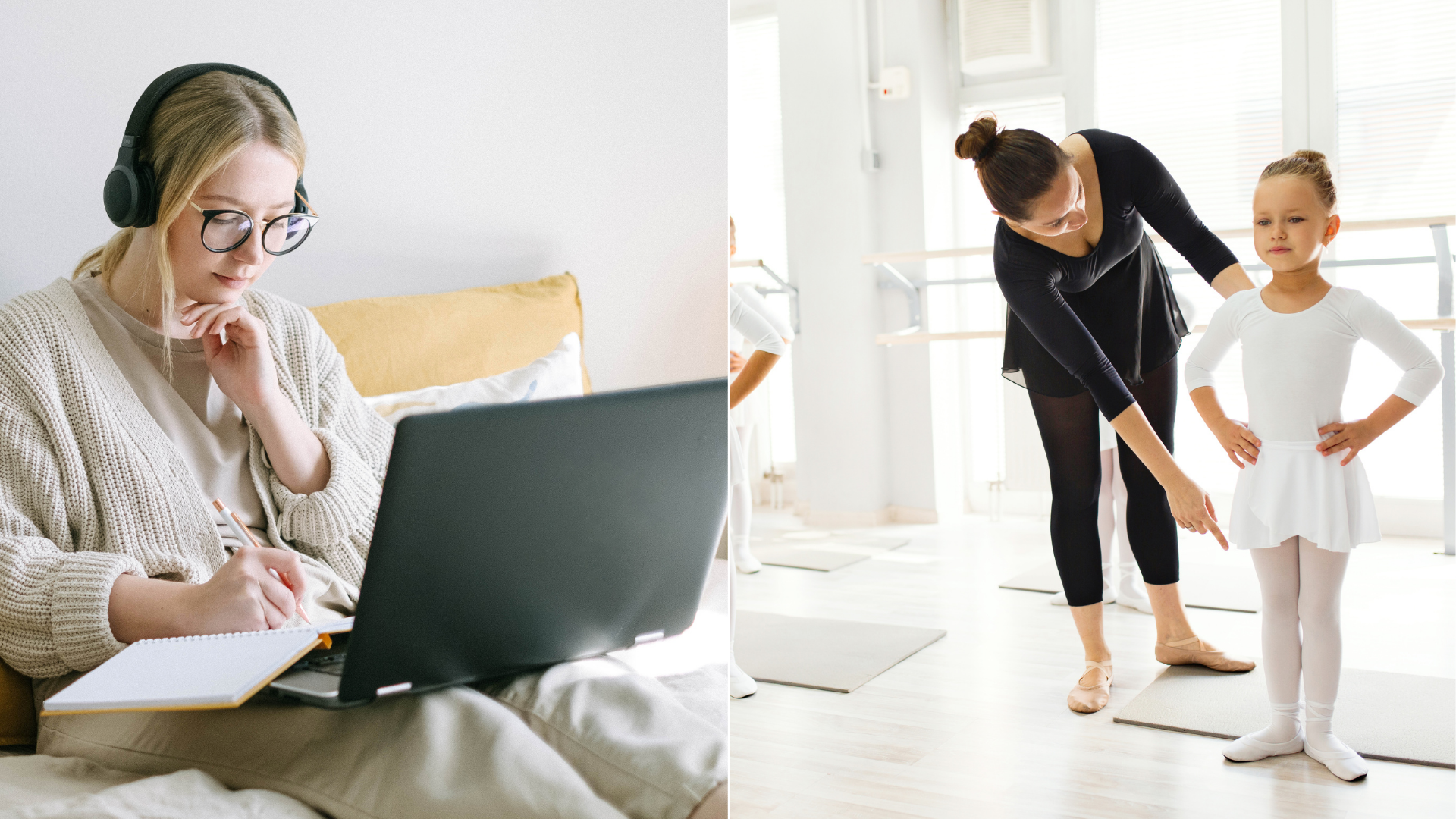
You've been taking regular group classes at your local studio and progressing nicely. But you're ready to accelerate your improvement—you want focused attention on your specific technique issues. Two options sit in front of you: weekly private lessons with a local instructor at $100-180 per hour (or 45min), or online video coaching with a specialist for $50-100 per critique. Or maybe you should do both?
The debate between online video feedback and traditional in-person instruction creates passionate opinions in the dance community. Traditionalists insist nothing replaces face-to-face coaching with immediate corrections and hands-on adjustments. Digital advocates argue video coaching provides access to world-class expertise regardless of location, plus the ability to review feedback repeatedly. Both positions have merit—and both miss the nuance.
The real question isn't "which is better?" but rather "which serves your specific needs right now?" and "how can these approaches complement each other?" This guide breaks down the genuine strengths and limitations of each format so you can make informed decisions about your dance education.
Understanding In-Person Private Lessons
What They Offer
Traditional private lessons provide real-time instruction where your coach stands in front of you, dances with you, makes immediate corrections, and adjusts teaching based on your instant responses. You might work on a specific figure for fifteen minutes, receive constant micro-corrections, feel your coach demonstrate proper technique through partnership connection, and leave with muscle memory from repeated practice under direct guidance.
In-person instruction has dominated dance education for a century because it works. The immediate feedback loop—attempt movement, receive correction, adjust, try again—creates efficient learning for physical skills. Your coach sees and feels what you're doing wrong in real-time and can intervene before incorrect patterns become habitual.
The Core Strengths
In-person lessons excel at several specific aspects of dance education:
Immediate kinesthetic feedback: Your coach physically feels your connection quality, frame tension, weight distribution, and lead-follow communication through partnership. They experience what your partner experiences, which video simply cannot capture. When your coach says "your frame is too tense," they know because they felt it through the connection, not just observed it visually.
Real-time correction loops: You execute a movement, your coach corrects immediately, you adjust and try again within seconds. This rapid iteration accelerates learning for physical skills because your body hasn't forgotten the attempt before receiving correction. The shorter the delay between attempt and feedback, the faster motor learning progresses.
Physical demonstrations and adjustments: Coaches can position your body correctly, adjust your frame manually, demonstrate technique while you observe closely, or dance with you so you feel correct execution through the partnership. These physical teaching methods communicate concepts that are difficult to explain verbally.
Adaptive teaching: Coaches read your confusion, frustration, or comprehension in real-time and adjust explanations instantly. If verbal explanation isn't working, they switch to demonstration. If you're getting frustrated, they pivot to something more encouraging. This responsiveness optimizes learning efficiency.
Partnership dynamics: For couples learning together, in-person lessons let coaches work with both partners simultaneously, correcting lead-follow communication, partnership connection, and the interaction between partners that creates the dance.
Immediate question resolution: Confusion about a correction? Ask immediately and get clarification before moving forward. No waiting for email responses or next video critique—your questions get answered in the moment.
The Limitations
Despite these strengths, in-person lessons carry significant constraints:
Geographic limitations: You're restricted to coaches within reasonable driving distance. If you live in a small town or area without strong competitive dance programs, your local coaching options might be limited to competent but not exceptional instructors. The world's best coach for your specific needs probably doesn't live in your city.
Cost considerations: Private lessons typically cost $100-150 per hour (or 45min) in most markets, with top coaches commanding $200+ hourly (or 45min) rates. These sessions happen in real-time, so coaches can only serve as many students as their schedule allows. This scarcity drives prices higher than asynchronous services like video feedback.
Scheduling constraints: In-person lessons require coordinating schedules, traveling to studios, and blocking fixed time slots. Busy professionals, parents with childcare responsibilities, or students with irregular schedules struggle to maintain consistent lesson schedules. Cancellations waste everyone's time.
Transience of instruction: Your coach provides verbal feedback and physical demonstrations during the lesson, but once class ends, those corrections exist only in your memory. You might remember the major points but lose subtle details. If you can't recall exactly what your coach said about that promenade correction, you're guessing until your next lesson.
Pressure and performance anxiety: Some dancers feel performance pressure during lessons, knowing they're paying $100+ per hour and feeling like they must execute everything perfectly right now. This pressure can inhibit natural movement and create tension that interferes with learning.
Limited access to specialists: Even in major cities, you might not have local access to coaches specializing in your specific needs. If you're working on advanced International Standard styling but your area only has American Smooth specialists, local options serve you poorly.
Understanding Online Video Feedback
What It Offers
Online video coaching involves submitting recorded videos of your dancing to coaches who review them on their schedule and provide detailed feedback—typically via annotated video critique, written analysis, or recorded commentary. You implement corrections independently, submit new videos showing progress, and receive additional feedback in iterative cycles.
This asynchronous format emerged from technology advancement but offers distinct pedagogical benefits beyond mere convenience.
The Core Strengths
Video feedback provides advantages that in-person instruction simply cannot match:
Access to expertise regardless of location: The former Blackpool finalist specializing in Viennese waltz technique? The national Latin champion known for Cuban motion instruction? The musicality expert who coached multiple championship couples? They're all available to you regardless of whether you live in New York City or rural Montana. Geography becomes irrelevant.
Permanent, reviewable feedback: Video critiques don't disappear when the session ends. You can rewatch your coach's analysis repeatedly, refresh your memory on specific corrections before practice sessions, and return to previous feedback months later to track your progress. This permanence dramatically increases the value extracted from each coaching dollar.
Objective analysis of actual performance: In-person coaches see what you do during lessons, which might differ from how you dance during practice or competition. Video captures your authentic dancing in realistic conditions. Competition footage shows exactly what judges see. Practice videos reveal habits you might unconsciously modify during formal lessons.
Time for thoughtful analysis: Coaches reviewing video can pause, rewind, watch in slow motion, and study specific moments carefully before formulating feedback. This thoroughness often catches subtle technical issues that real-time coaching might miss in the flow of continuous movement.
Cost efficiency: Video feedback typically costs $50-100 per review compared to $100-200+ for hourly in-person instruction. You're paying for the coach's analysis time, not real-time presence, which significantly reduces cost. For budget-conscious students, video coaching stretches dance education dollars further.
Scheduling flexibility: Submit videos whenever convenient. Receive feedback on your coach's schedule. No coordinating calendars, no driving to studios, no 7am lessons because that's the only available slot. This flexibility makes consistent coaching sustainable for busy people.
Multiple coaches for specialized needs: Want a Standard specialist for your waltz but a different coach for Latin technique? Video coaching makes this easy and affordable. Building a "coaching team" of specialists would be prohibitively expensive and logistically impossible with in-person lessons.
Focus and prioritization: Written feedback or recorded critiques force coaches to organize thoughts clearly and prioritize corrections. This structured approach often provides clearer guidance than stream-of-consciousness verbal feedback during in-person lessons.
The Limitations
Video feedback isn't universally superior—it has genuine constraints:
No kinesthetic feedback: Coaches can see your frame but can't feel whether it's too tense or too soft. They observe your connection but don't experience it through partnership. Visual information alone misses tactile and kinesthetic dimensions of dance.
Delayed feedback loop: Days or weeks might pass between recording video, receiving feedback, implementing corrections, and submitting follow-up video. This delay slows the iteration cycles that accelerate motor learning. You might practice incorrectly for days before discovering your interpretation of a correction was wrong.
Self-directed implementation: You're responsible for understanding and implementing corrections independently. If a correction doesn't make sense or you're unsure how to execute it, you must wait for coach response rather than getting immediate clarification. Self-motivated, independent learners thrive with this format; students who need more hand-holding struggle.
Limited partnership work: Video coaching for couples is possible but less effective than in-person partnership instruction. Coaches can see both partners but can't work with you simultaneously to refine connection and lead-follow communication through direct interaction.
Technical and environmental constraints: Not everyone has access to adequate recording space, equipment, or technical knowledge for producing quality coaching videos. Poor video quality limits coaching effectiveness.
Reduced relationship building: The personal connection between student and coach develops differently through video exchanges versus face-to-face interaction. Some students thrive on personal coaching relationships that feel harder to establish through digital communication.
Requires technical foundation: Complete beginners learning basic steps benefit more from in-person guidance. Video coaching works best for students who've mastered fundamentals and are refining technique, not learning basic patterns for the first time.
Comparing Specific Learning Scenarios
Scenario: Absolute Beginner Learning Basic Patterns
In-person wins: Beginners need real-time guidance learning basic footwork, timing, and fundamental patterns. The immediate correction loop and physical demonstrations make in-person instruction significantly more effective for initial skill acquisition.
Video feedback role: Minimal value at this stage unless supplementing regular group classes with occasional video check-ins on specific trouble spots.
Scenario: Intermediate Dancer Refining Technique
Both valuable: In-person lessons work on feel, connection, and complex movements requiring hands-on guidance. Video feedback identifies technical issues your regular instructor might miss or provides perspective from specialized coaches. Many intermediate dancers benefit from combining weekly or monthly in-person lessons with periodic video coaching from specialists.
Scenario: Advanced Competitor Preparing for Major Competition
Both essential: Top competitors typically maintain regular in-person coaching with primary instructors plus video coaching from specialists for specific technical elements. Competition footage review through video coaching provides objective analysis of actual performance under pressure that in-person practice sessions can't replicate.
Scenario: Social Dancer Improving Specific Technique
Video feedback wins: Social dancers usually want specific improvements (better frame, smoother turns, improved musicality) rather than comprehensive instruction. Video coaching provides targeted, affordable feedback on specific issues without committing to expensive ongoing lessons.
Scenario: Dancer in Geographic Isolation
Video feedback wins: When quality local instruction isn't available, video coaching provides access to expertise otherwise completely inaccessible. The limitation is still better than no coaching at all.
Scenario: Couple Working on Partnership Connection
In-person wins: Connection quality, lead-follow communication, and partnership dynamics benefit enormously from coaches who can feel and work with both partners simultaneously. Video provides supplementary analysis but shouldn't be primary coaching method for partnership fundamentals.
Making Your Decision
Choose primarily in-person lessons when:
You're a beginner learning fundamental patterns and basic technique
You're working intensively on partnership connection and lead-follow communication
You need hands-on physical adjustments to understand proper body positioning
You thrive on immediate feedback and real-time correction cycles
You have access to excellent local coaching that matches your specific needs
You prefer the accountability and structure of scheduled appointments
Budget allows for consistent weekly investment
Choose primarily video feedback when:
You're intermediate or advanced working on specific technical refinement
Local coaching options are limited or don't specialize in your focus areas
Budget constraints make in-person lessons unsustainable
Your schedule makes regular lesson commitments difficult
You want feedback from multiple specialized coaches on different aspects of your dancing
You're preparing for competition and want objective analysis of actual competition footage
You learn well independently and are self-motivated about implementing corrections
Choose a hybrid approach when:
Budget allows for both but not unlimited in-person instruction
You want the best of both worlds—regular hands-on guidance plus specialized expertise
You're serious about continuous improvement and willing to invest strategically
You're working on multiple aspects of dancing (partnership work in-person, technique refinement via video)
You want to maintain relationship with local coach while accessing specialized expertise for specific issues
Maximizing Value from Each Format
Getting Most from In-Person Lessons
Record your lessons: Many coaches allow students to record lessons (ask permission first). These recordings let you review corrections later, dramatically increasing value from each session. What you might forget days later remains accessible through video.
Come prepared with specific goals: Don't waste expensive lesson time figuring out what to work on. Arrive knowing what you want to improve, which allows coaches to target instruction effectively.
Take notes immediately after lessons: While corrections are fresh, jot down key points, specific drills, and priority areas. These notes guide your practice between lessons.
Practice between lessons: In-person instruction without practice between sessions wastes the investment. Implement corrections during practice, then bring questions about implementation to your next lesson.
Getting Most from Video Feedback
Provide context in submissions: Tell coaches what you're working on, what specific questions you have, and what goals you're pursuing. This context helps them tailor feedback to your actual needs.
Review feedback multiple times: Don't watch critique once and move on. Review it before each practice session, reference specific timestamps while practicing, and return to it when you're confused about implementation.
Ask follow-up questions: Most coaches welcome clarifying questions about their feedback. Don't practice incorrectly for weeks because you were afraid to ask for clarification.
Implement systematically: Focus on 2-3 priority corrections rather than trying to fix everything simultaneously. Submit follow-up video showing progress on specific corrections.
Record your practice sessions: Video yourself regularly, not just when submitting for coaching. This self-awareness accelerates improvement and helps you monitor whether you're implementing corrections correctly.
The Complementary Approach
The most successful dancers often don't choose between video feedback and in-person lessons—they strategically combine both formats:
Foundation building in-person: Regular lessons with a local coach or instructor establish foundational skills, maintain technique accountability, and provide hands-on guidance for complex movements.
Specialized video coaching: Periodic video feedback from specialist coaches addresses specific technical challenges, provides objective competition footage analysis, and offers perspective beyond what your regular instructor provides.
Strategic timing: Use in-person lessons during intensive preparation periods (right before competitions, when learning new choreography, when partnership issues need immediate attention). Use video coaching during maintenance periods or when working on specific long-term technical development.
Complementary insights: Different coaches notice different things. Your in-person instructor might focus on what they feel through connection. Video coaches see visual details your regular instructor might miss. This multiple-perspective approach creates more comprehensive improvement.
Common Misconceptions
Misconception: Video coaching is inferior to in-person
Reality: Video coaching is different, not inferior. For certain learning objectives (technical refinement, specialized expertise access, objective performance analysis), video coaching actually provides superior value. The formats serve different purposes optimally.
Misconception: In-person lessons are always better for beginners
Reality: Absolute beginners learning basic patterns benefit most from in-person instruction. But intermediate "beginners" (those who know basic patterns but want better technique) often benefit enormously from video coaching, particularly if local options are limited.
Misconception: You must choose one format exclusively
Reality: The most effective approach for serious dancers combines both formats strategically. You don't choose between in-person and video—you optimize the mix based on current goals, budget, and available coaching options.
Misconception: Video coaching can't improve partnership connection
Reality: While in-person partnership work remains important, video coaching absolutely improves connection through technical corrections that enhance lead-follow communication. Coaches analyzing video can identify connection breakdowns, frame issues, and partnership timing problems clearly.
Misconception: Top dancers only use in-person coaching
Reality: Elite competitors frequently use both formats. They maintain close relationships with primary coaches through regular in-person work while consulting specialist coaches via video for specific technical elements.
Questions to Ask Yourself
Evaluating your needs:
What's my current skill level and what specific improvements am I seeking?
What's my realistic budget for dance coaching over the next 3-6 months?
What quality coaching is available locally versus through online platforms?
Do I learn better with immediate feedback or do I implement corrections well independently?
Am I working primarily on partnership dynamics or individual technical refinement?
Do I need accountability and structure or do I self-motivate effectively?
Would I benefit from feedback from multiple specialized coaches or deep relationship with one coach?
Your honest answers to these questions reveal which coaching format serves your current needs most effectively.
The Path Forward
The "versus" framing of video feedback versus in-person lessons creates false dichotomy. Both formats serve dance education powerfully, each with distinct strengths suited to different learning objectives. Rather than declaring one superior, thoughtful dancers evaluate their specific situation—current level, available local coaching, budget constraints, learning style, immediate goals—and choose the format or combination that serves them best.
You might start with group classes and add occasional video coaching for specific technique questions. Or maintain monthly in-person lessons while getting quarterly competition footage reviews from specialist coaches. Or use primarily video coaching because you live where quality local instruction doesn't exist. Or invest heavily in weekly in-person lessons during competition prep season and switch to maintenance video coaching during off-season.
The optimal approach evolves as your dancing progresses, your goals shift, and your circumstances change. What works perfectly for six months might need adjustment as you advance to the next level or move to a new city or shift from social dancing to competitive focus.
The dancing matters more than the delivery format. Any coaching—in-person, video, or hybrid—that produces genuine improvement serves you well. Start with what's accessible and affordable right now, extract maximum value from it, and adjust your approach as needed. Your improvement trajectory depends far more on your commitment to implementing feedback than on which coaching format delivered that feedback.
Both formats work. The question is: which works best for you, right now, for what you're working on? Answer that honestly, invest accordingly, and enjoy the improvements that thoughtful coaching—however delivered—provides.